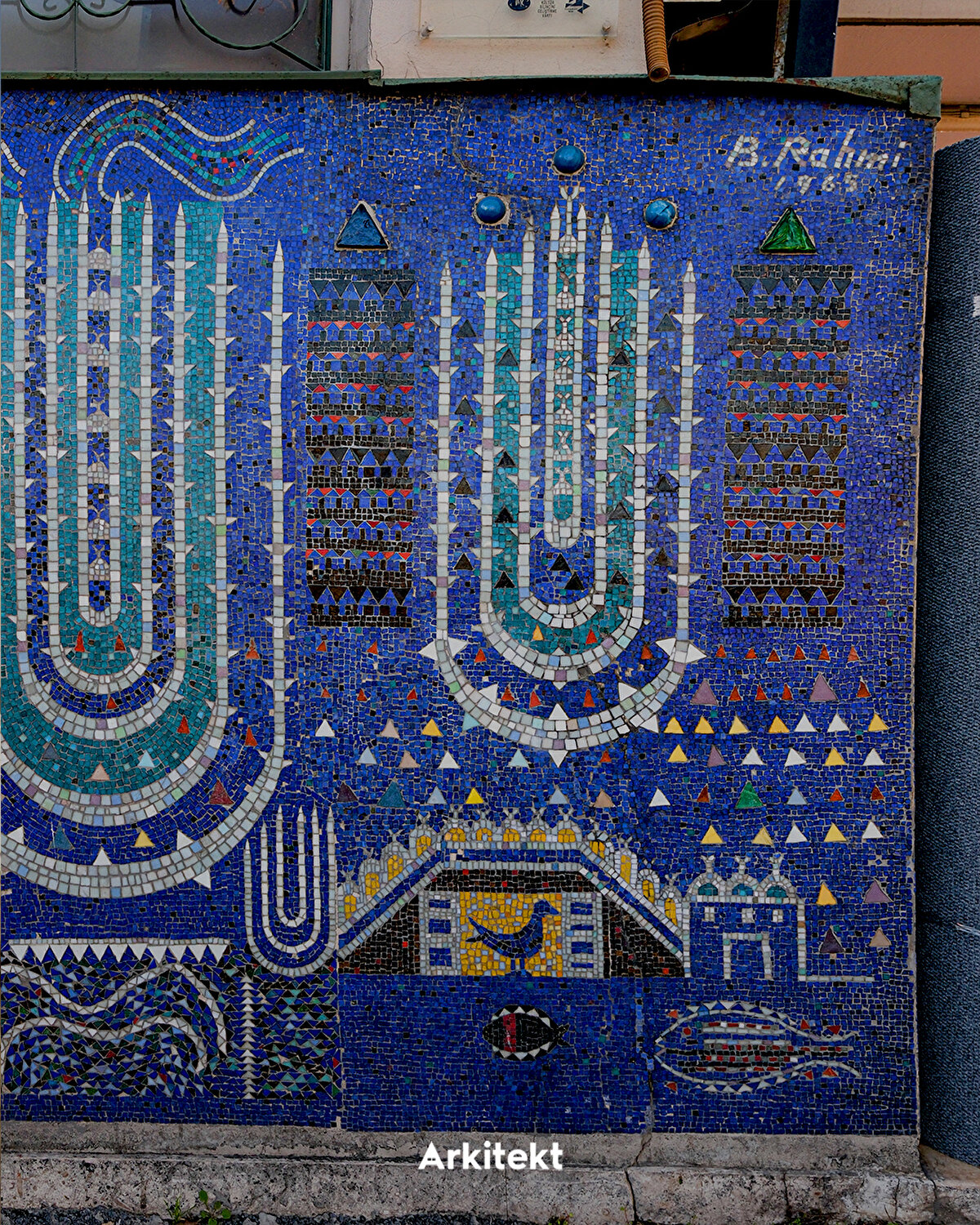


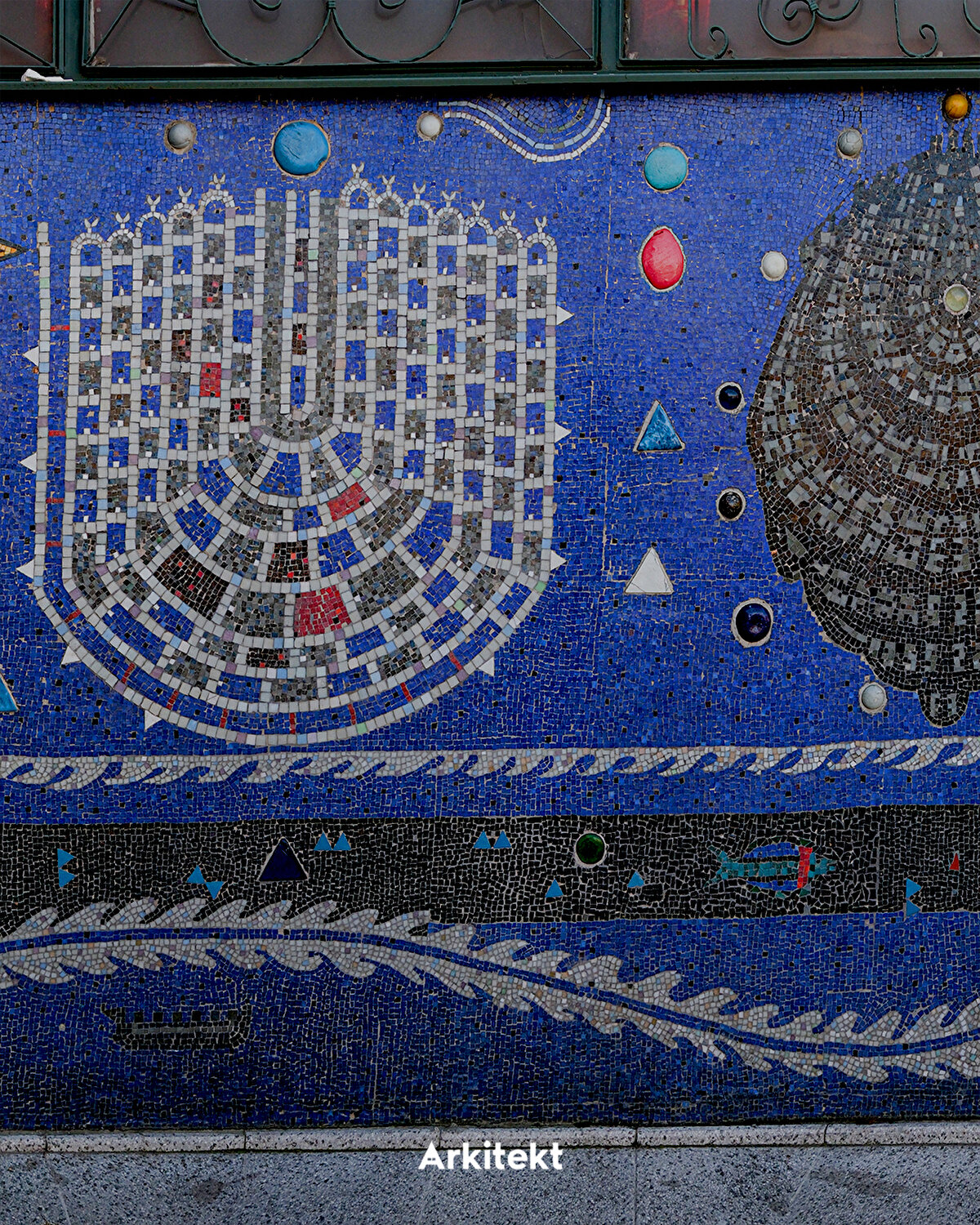
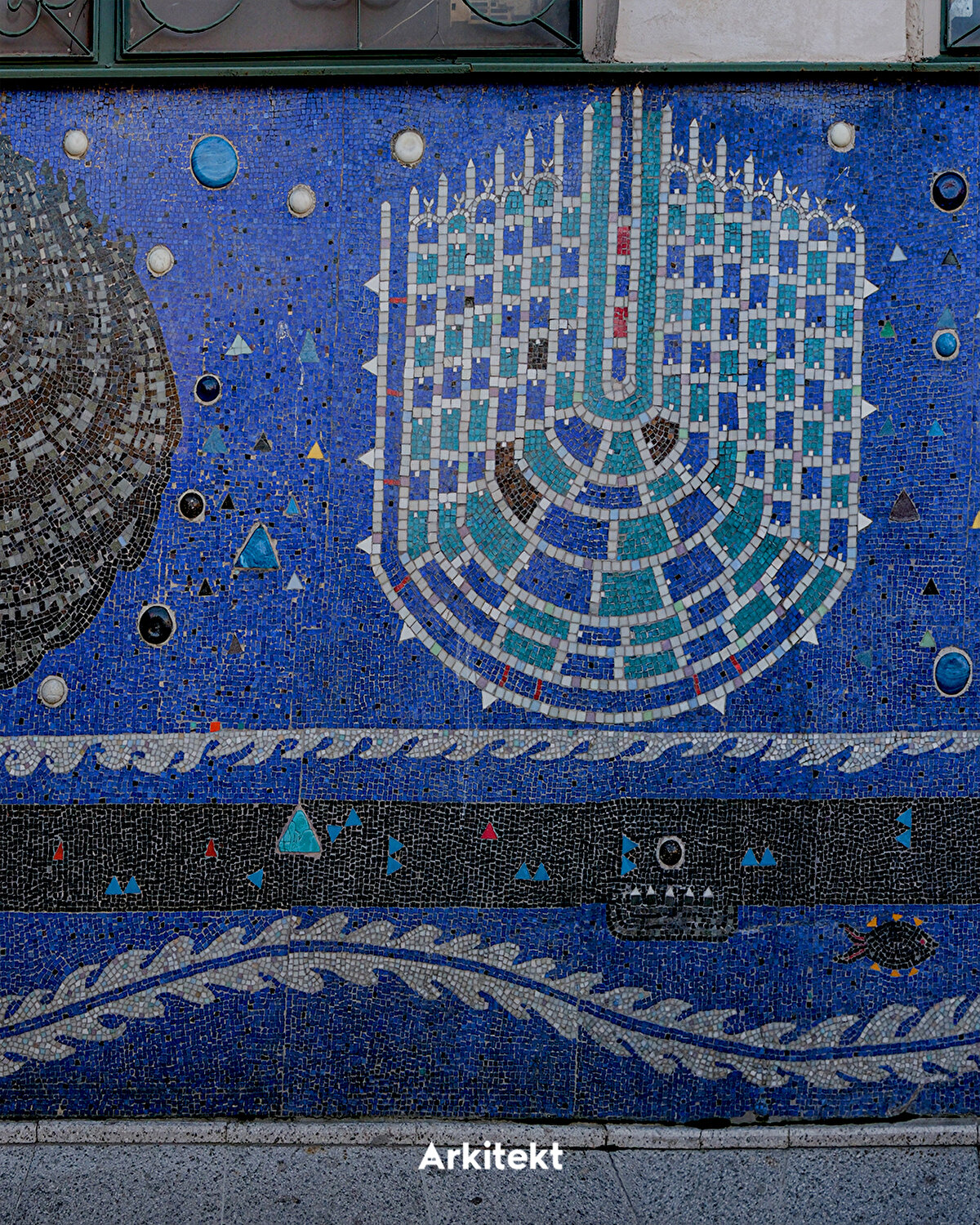
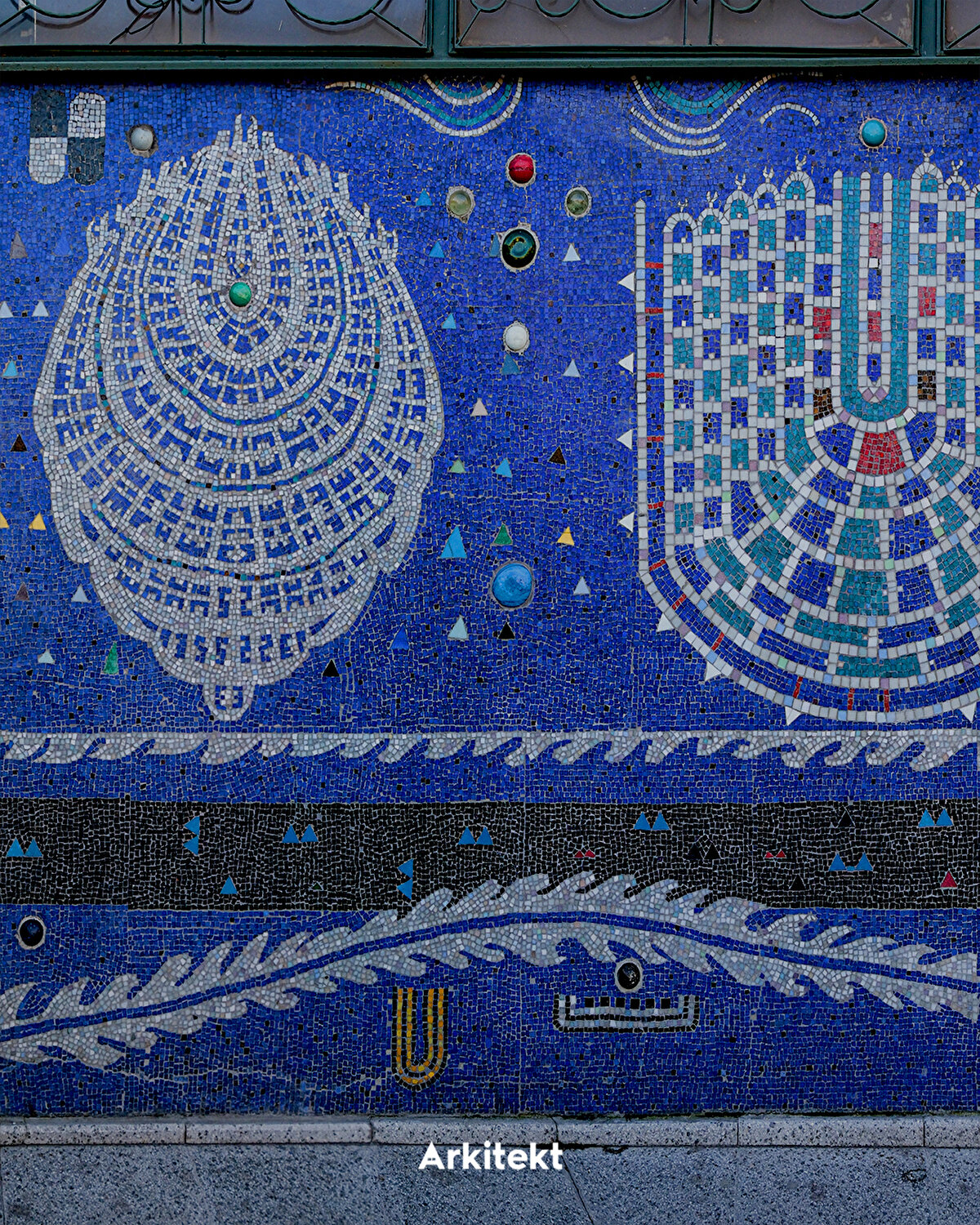
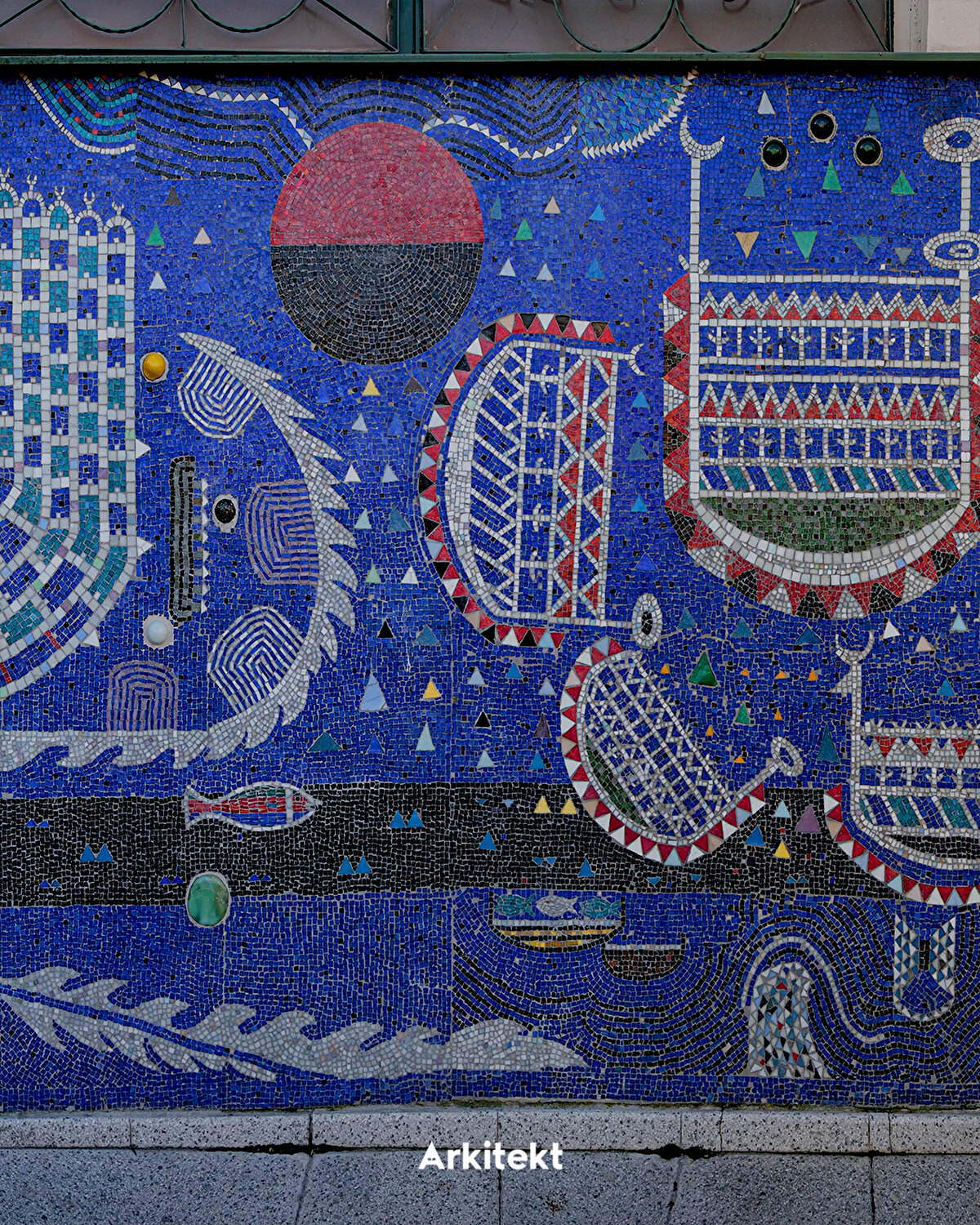
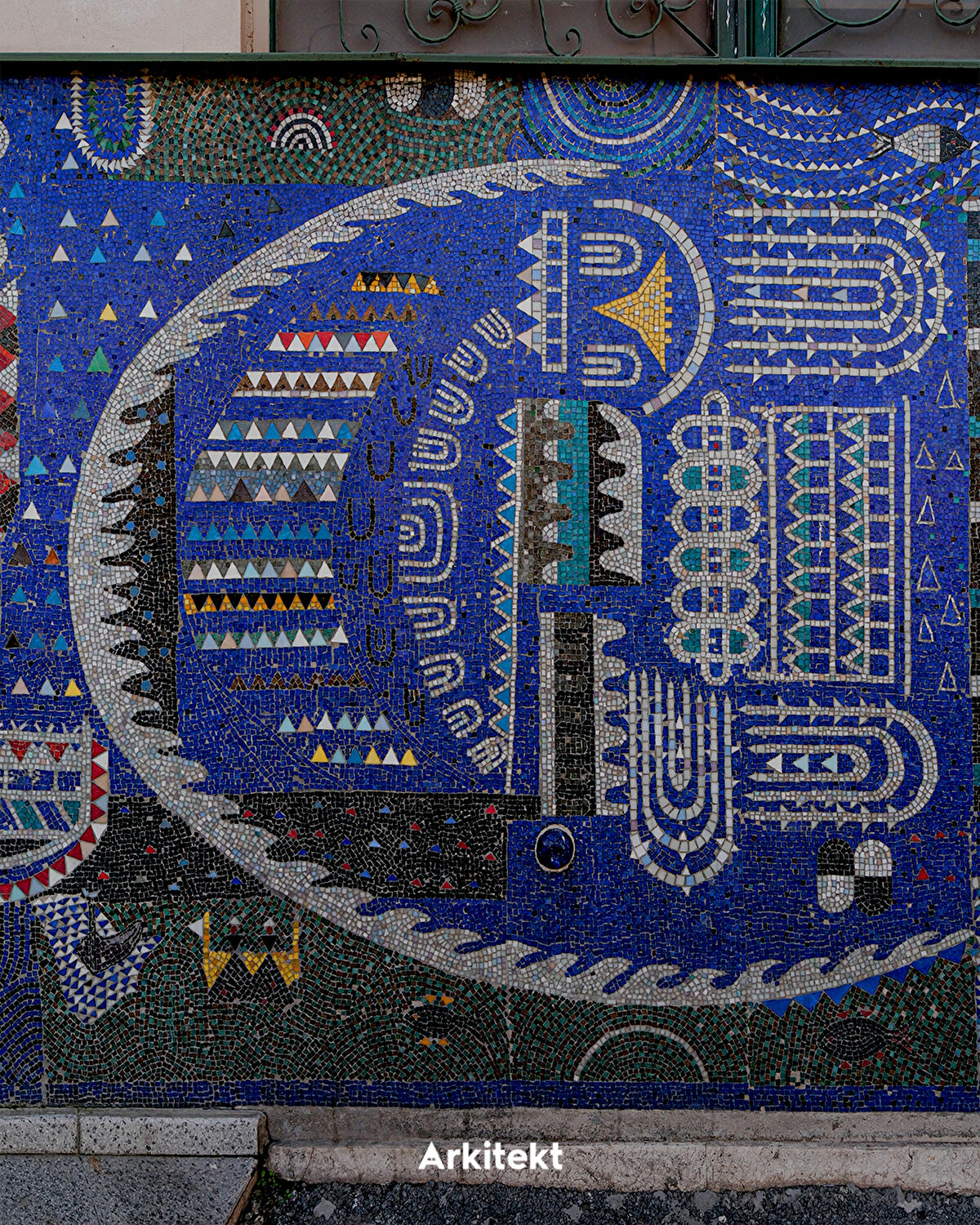
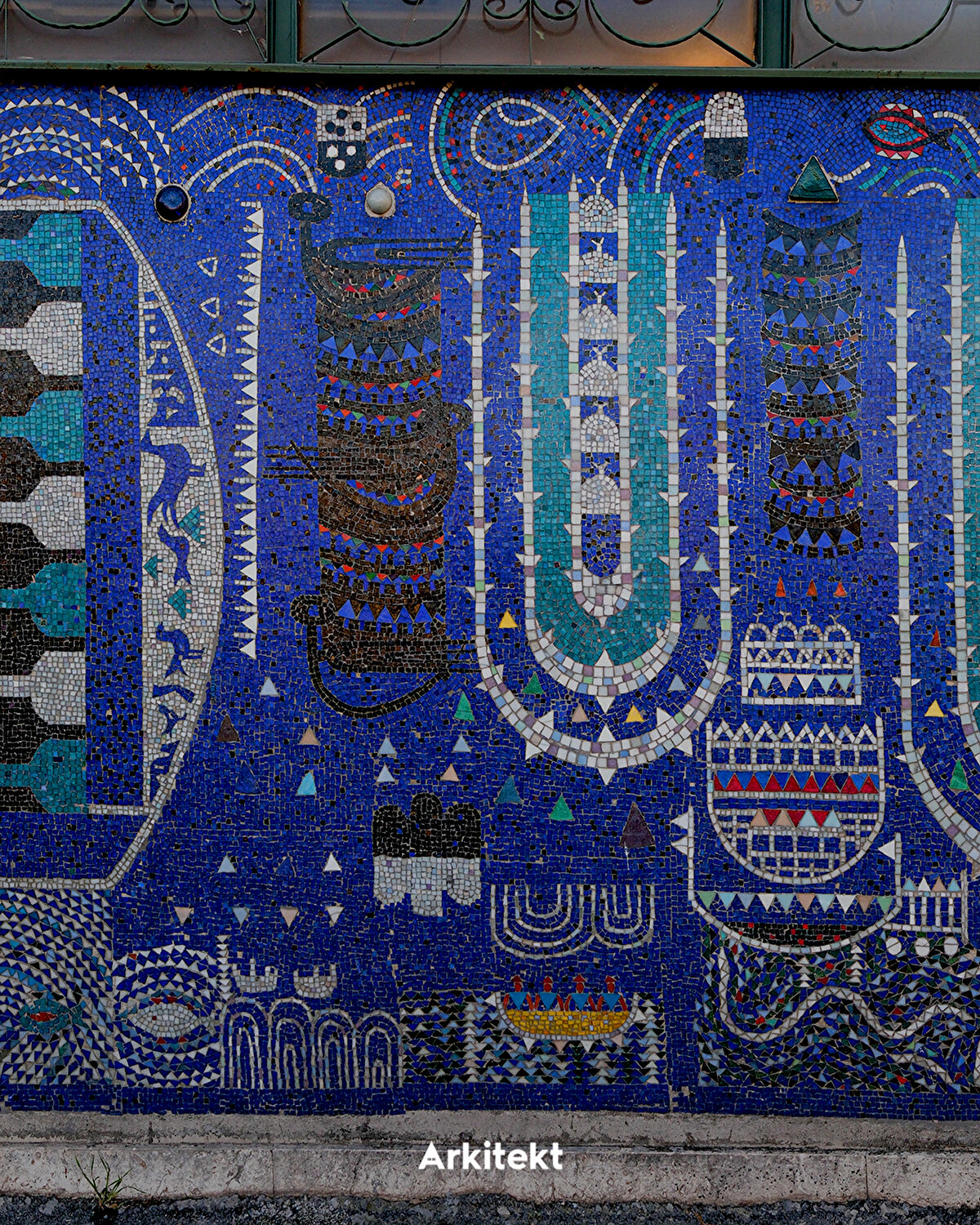
İMÇ Mozaik Pano-Bedri Rahmi Eyüboğlu 🔹

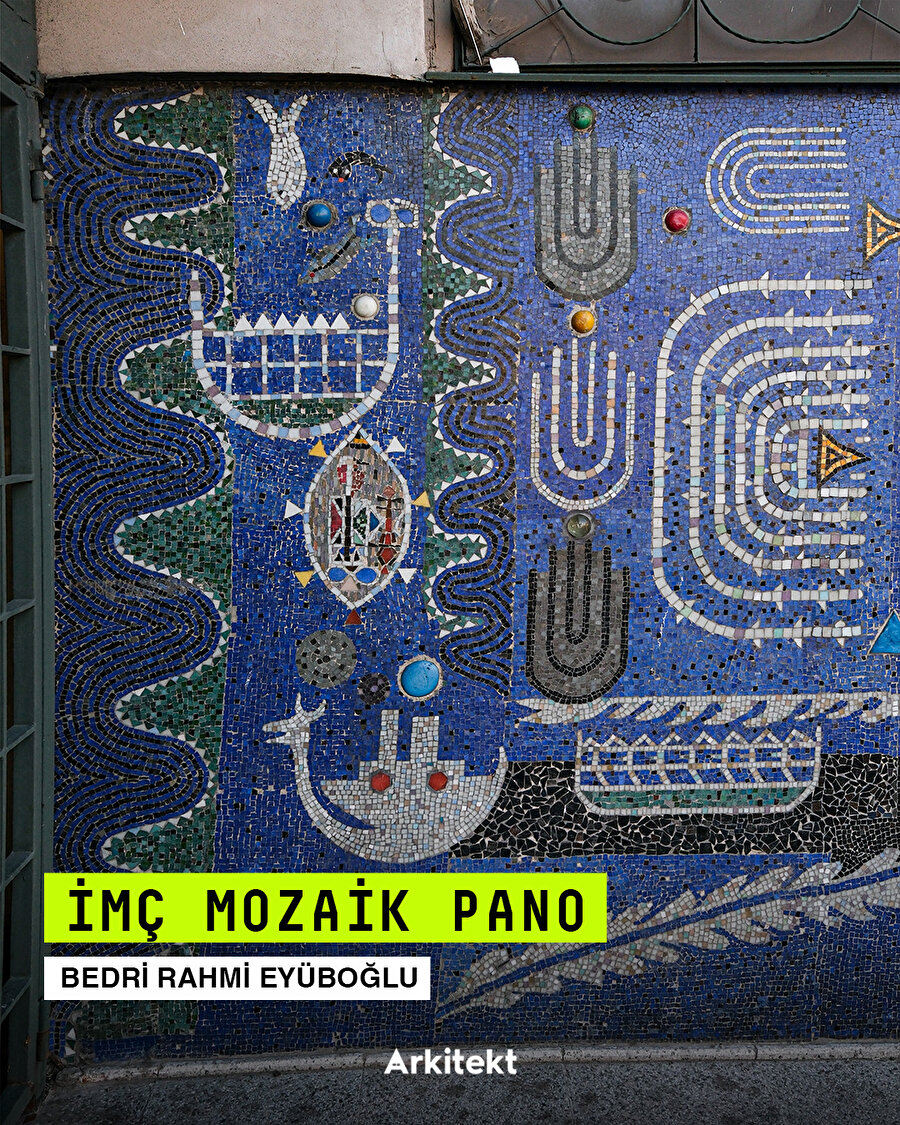
1950'li yıllarda düzenlenen şehircilik ve mimarlık yarışmalarıyla tasarım süreci başlayan İstanbul Manifaturacılar Çarşısı, mimarlık yarışmasını kazanan dönemin genç mimarları Doğan Tekeli, Sami Sisa ve Metin Hepgüler tarafından tasarlandı.
Yapı, yaklaşık 10 yıl süren tasarım süreci ve 7 yılı aşkın inşa süreciyle 1967 yılında kullanıma açıldı. Tasarım sürecinde verilen önemli kararlardan birisi de yapıda mimarların belirlediği noktalarda modern Türk sanatının önemli örneklerine yer vermekti.
Bu amaçla yapının mimarları tarafından önerilen davetli bir yarışmayla 8 sanatçının eserlerine yapının farklı noktalarında yer verilmiştir. Sanatçıların çalışacakları mekânlar mimarlar tarafından belirlenirken eserlerin temaları sanatçıların takdirine bırakılmıştır.
Türkiye'de mimarlık ve sanat birlikteliğinin önemli örneklerinden olan İMÇ, bugün tasarlandığı noktadan oldukça uzaklaşmış olsa da hâlâ hareketli avluları, çeşitlenen mekânları ve 8 sanat eseriyle kullanıcısına hizmet vermeye devam etmektedir.
Fotoğraf: @asimyaldz / @alpinizim_
__
İMÇ Mosaic Panel-Bedri Rahmi Eyüboğlu 🔹
The Istanbul Manifaturacılar Çarşısı (IMÇ), whose design process began with urban planning and architectural competitions held in the 1950s, was designed by the young architects of the era—Doğan Tekeli, Sami Sisa, and Metin Hepgüler—who won the architectural competition. The building was inaugurated in 1967 after an approximately ten-year design process and more than seven years of construction.
One of the significant decisions made during the design phase was to incorporate notable examples of modern Turkish art at specific points within the building, as determined by the architects. To achieve this, a limited-invitation competition was organized under the recommendation of the architects, resulting in the inclusion of works by eight artists at various locations throughout the complex. While the architects determined the spaces in which the artists would work, the themes of the artworks were left to the discretion of the artists.
As a prominent example of the collaboration between architecture and art in Turkey, IMÇ continues to serve its users with its lively courtyards, diverse spaces, and eight artworks, even though it has diverged considerably from its originally designed context.
1-8

2-8
3-8
4-8
5-8
6-8
7-8
8-8