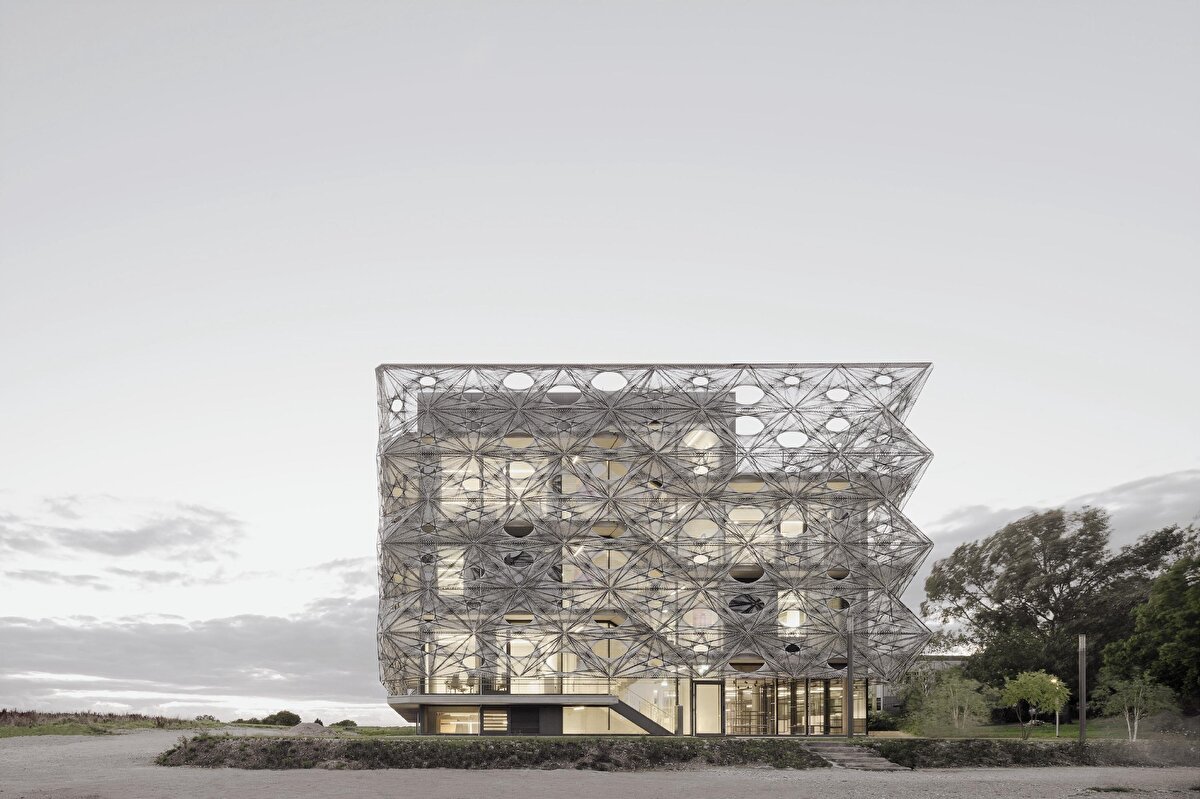


Mimarlık ve tekstil teknolojisi Texoversum yapısında birleşiyor

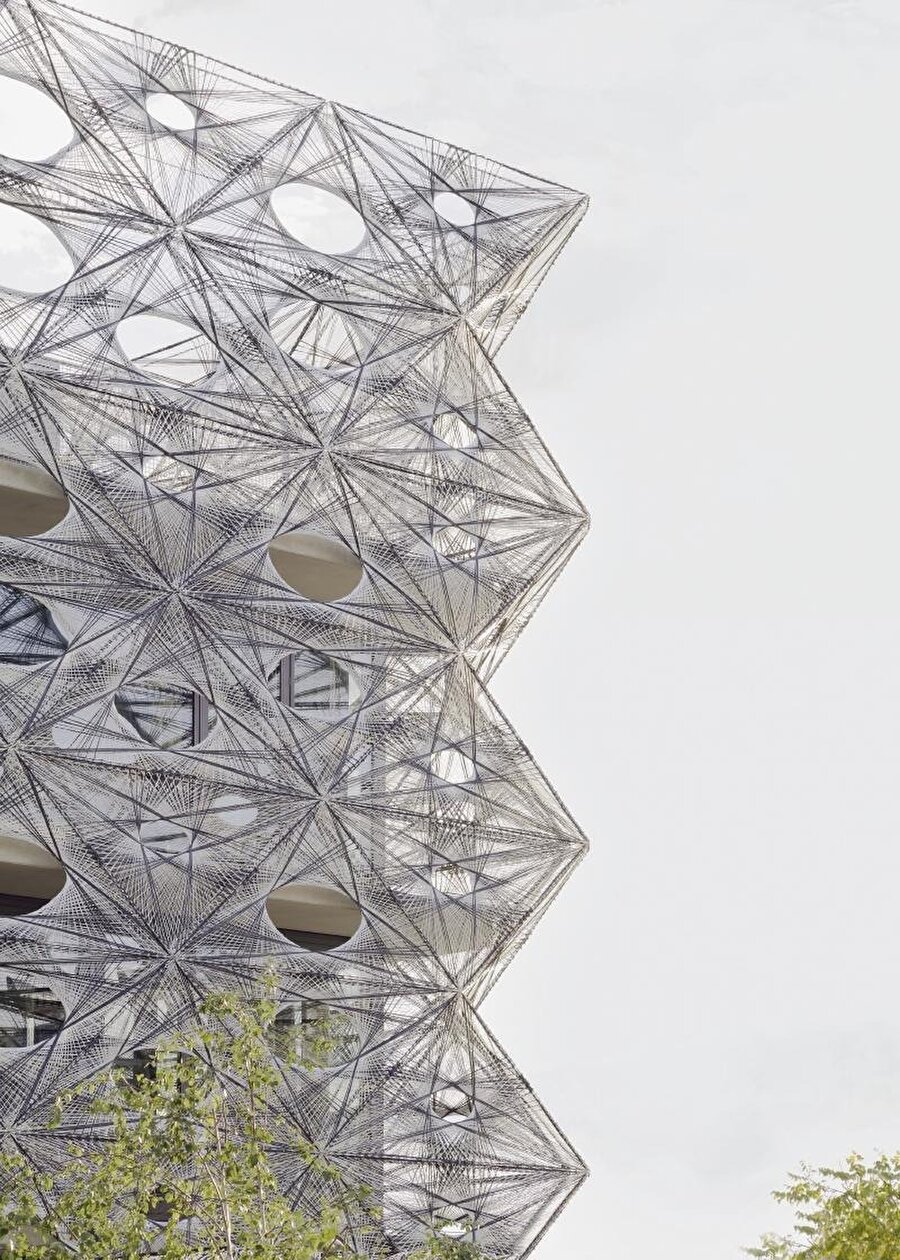
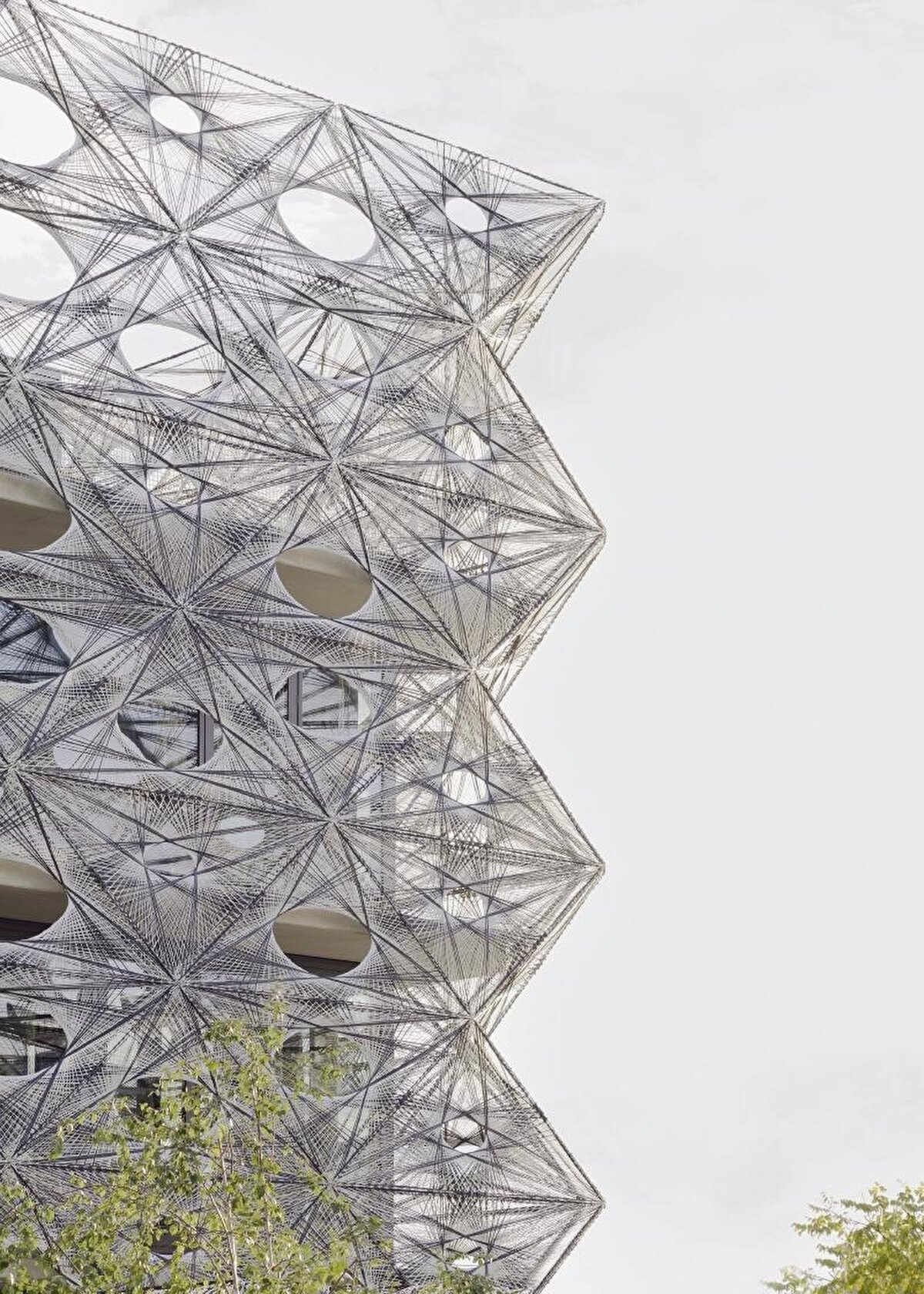
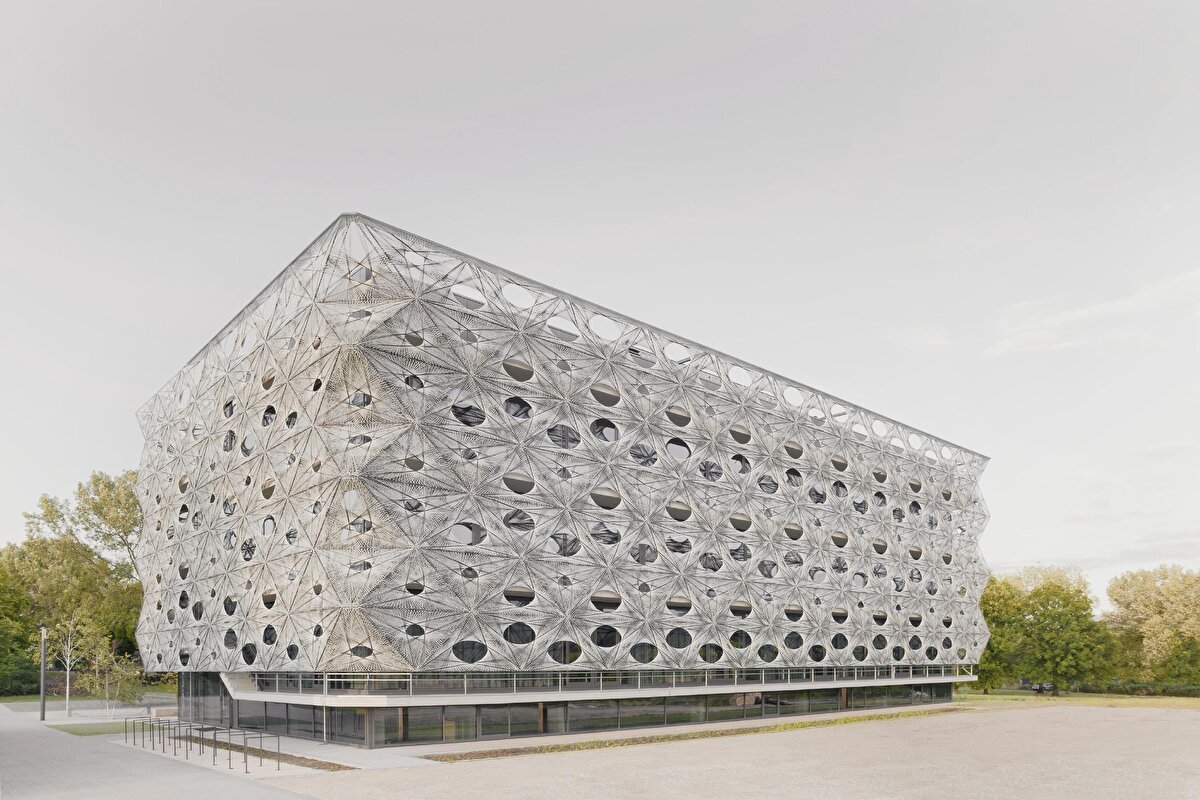
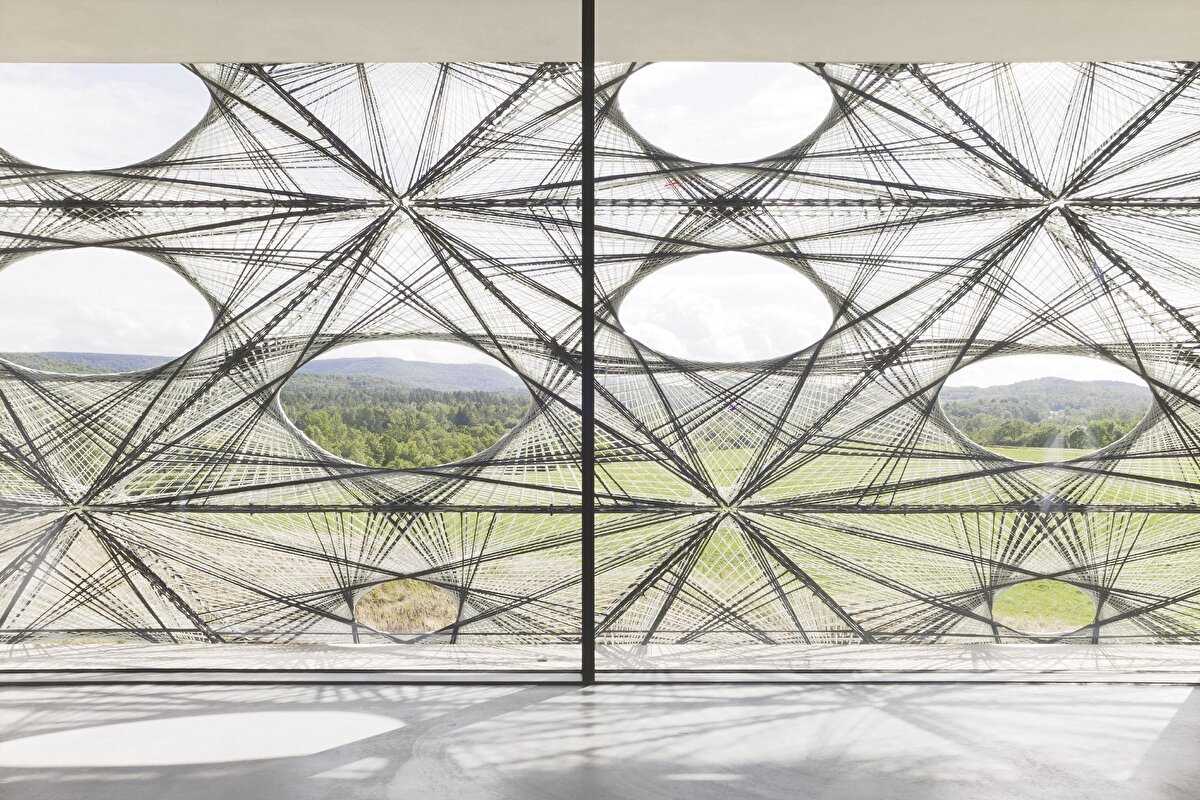
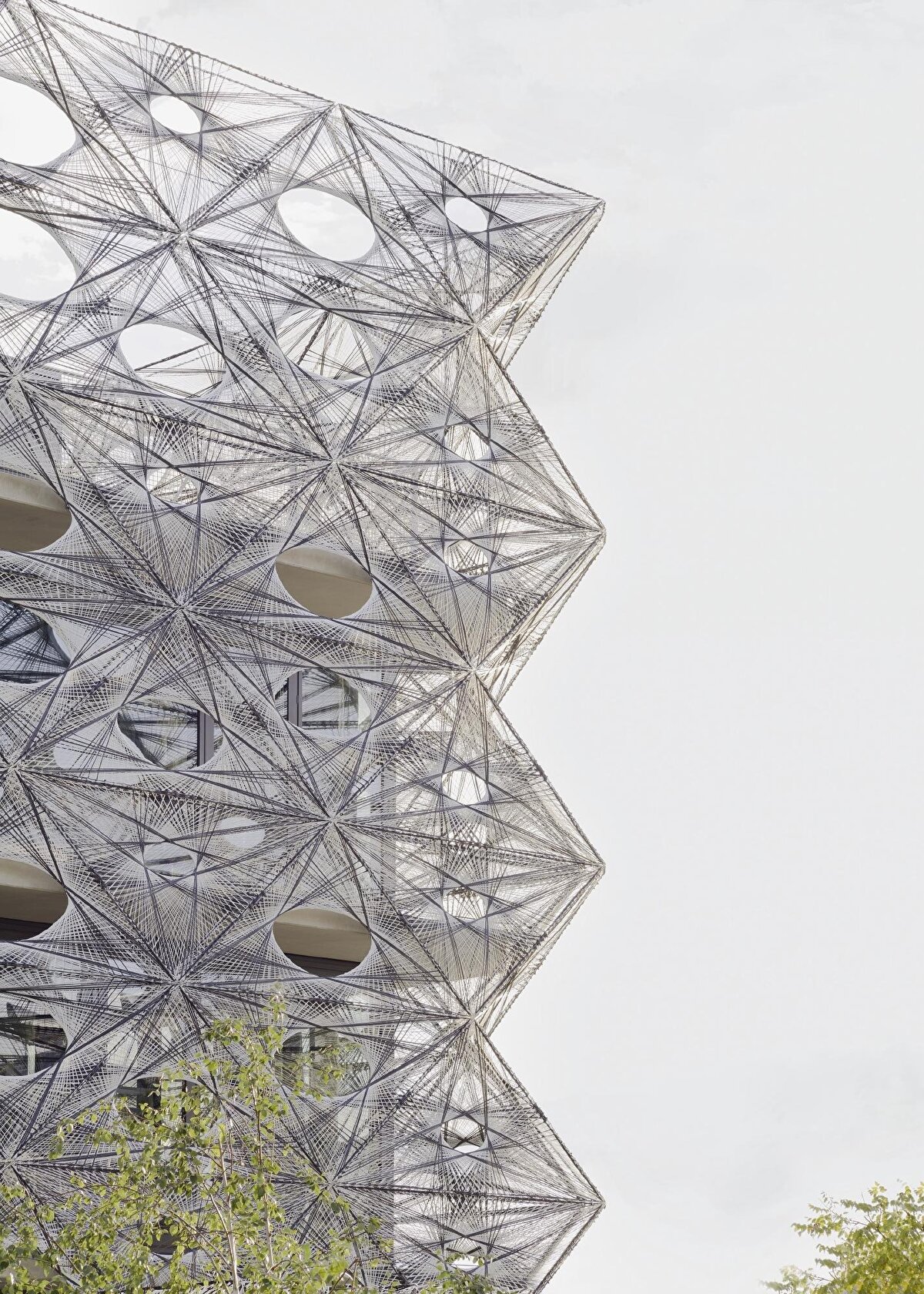
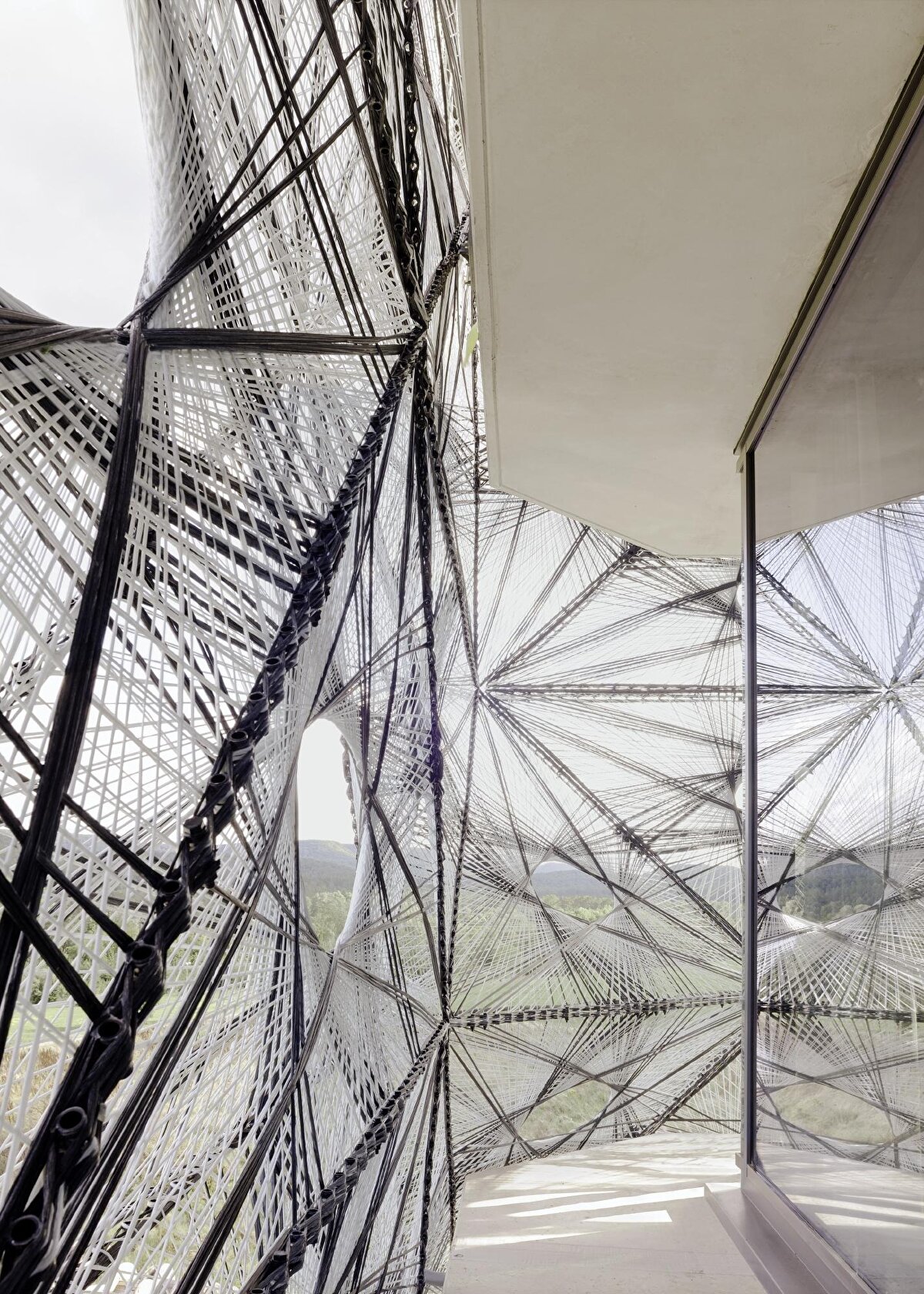
Texoversum, allmannwappner ile Menges Scheffler Architekten tarafından, Jan Knippers Ingenieure işbirliğiyle 2023 yılında Almanya'nın Reutlingen kentinde tekstil tabanlı teknolojiler için araştırma, eğitim ve üretim işlevlerini bir araya getiren bir merkez olarak tasarlanıyor. Yapının cephesi, 'robotic filament winding' yöntemiyle üretilmiş karbon ve cam elyaf elemanlardan oluşuyor; bu elemanlar taşıyıcı özellikleri sayesinde cepheyi yalnızca bir kaplama olmaktan çıkararak strüktürel bir kabuğa dönüştürüyor. Güneş yönelimlerine göre yerleştirilen karolar, geçirgenlik, gölgeleme ve görsel derinlik etkilerini aynı yüzeyde buluşturarak temsil gücü yüksek bir dış kabuk oluşturuyor.
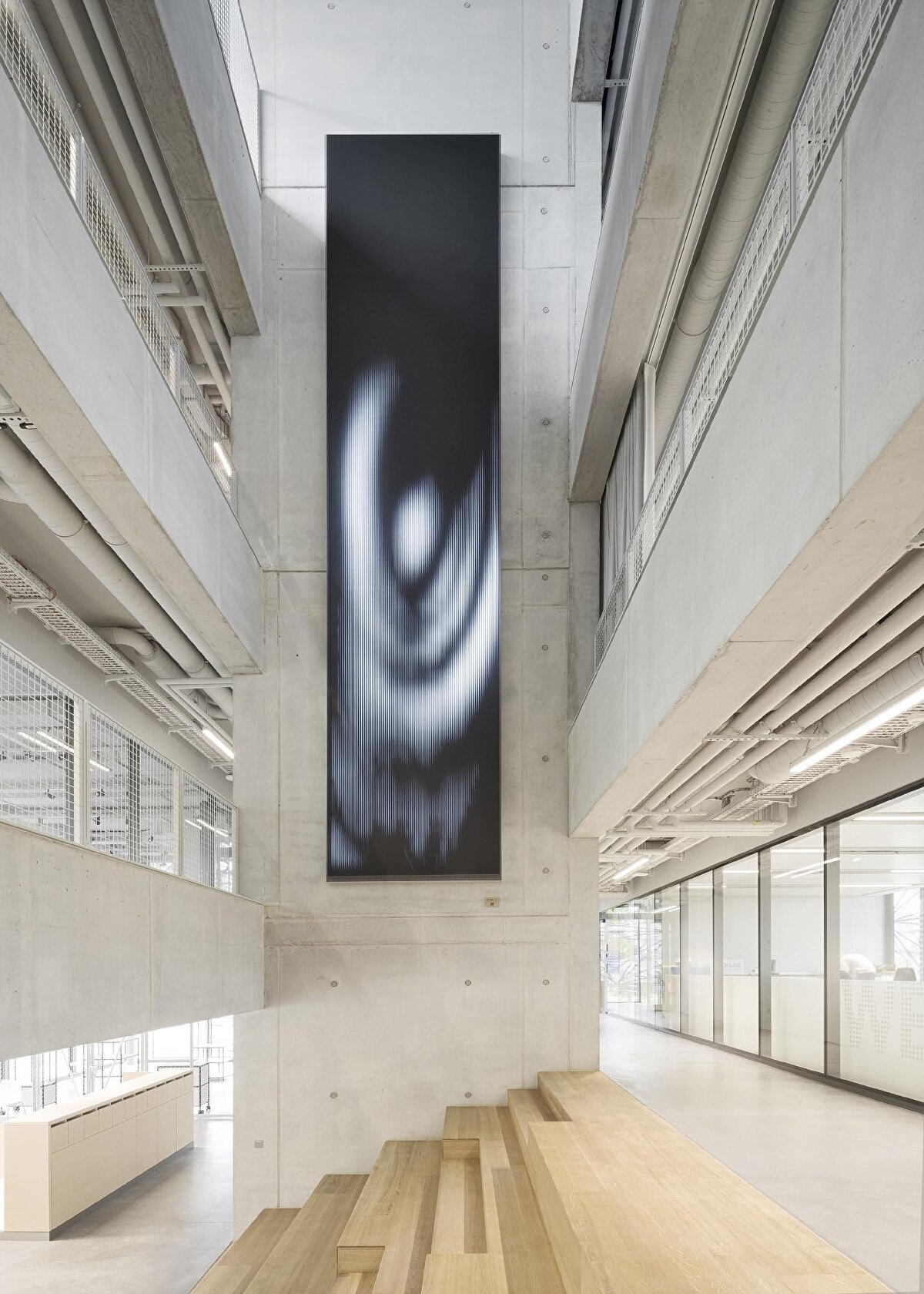
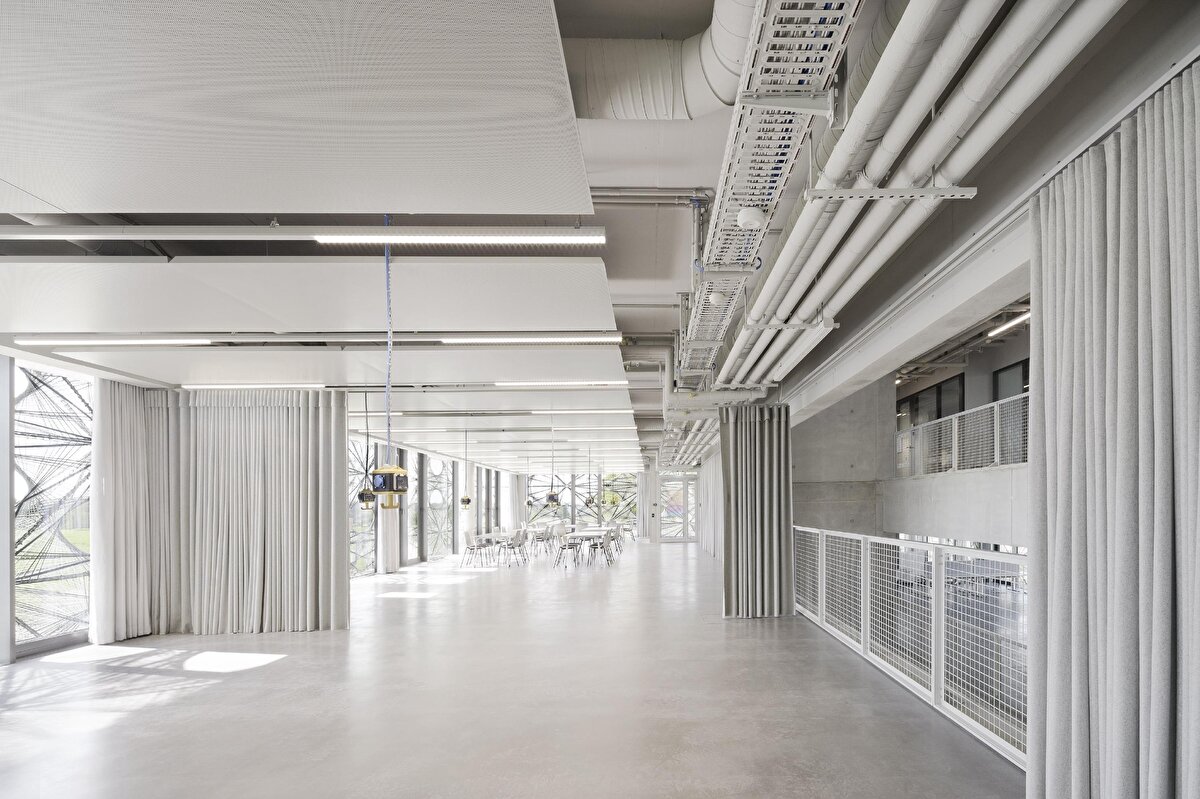
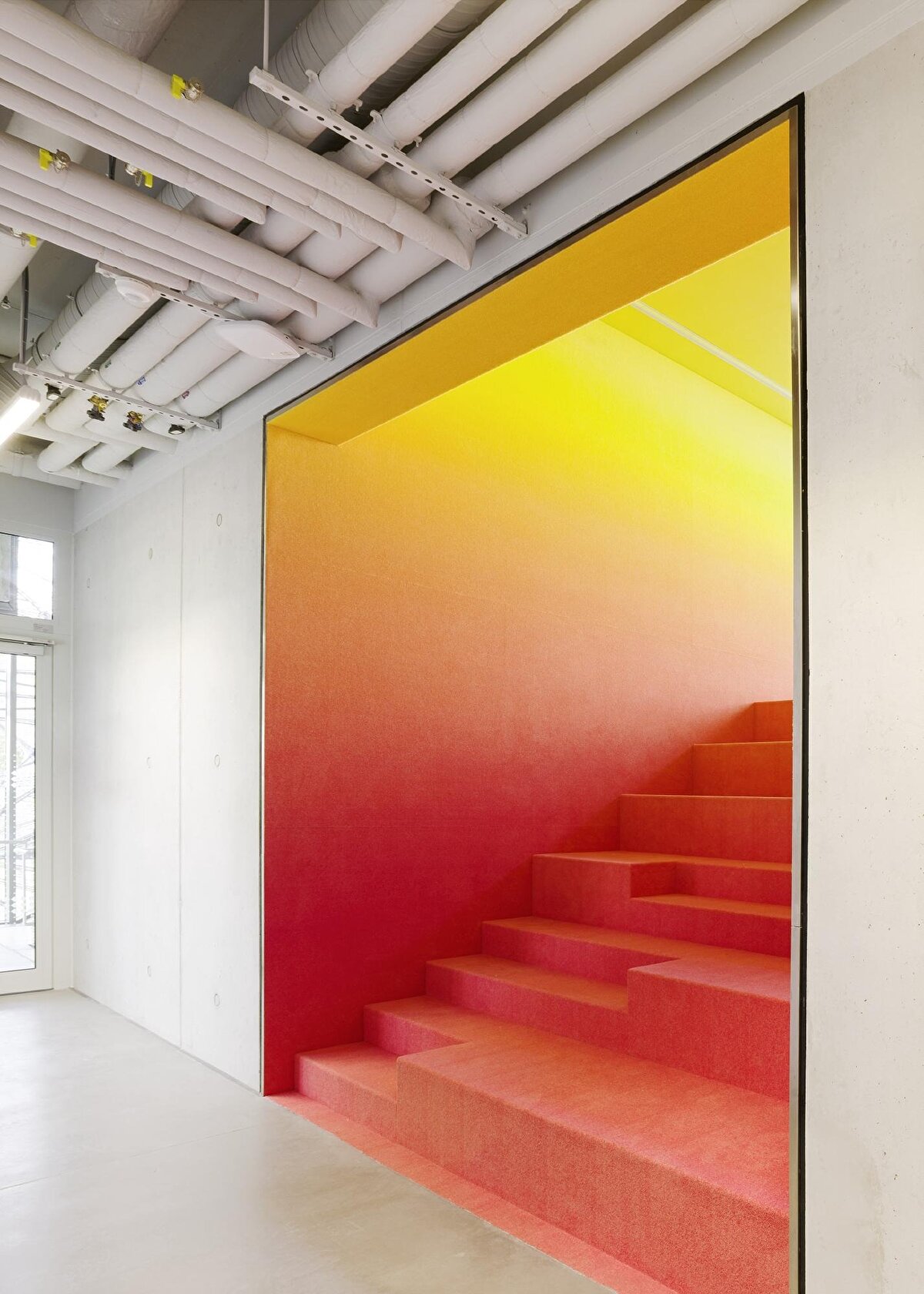
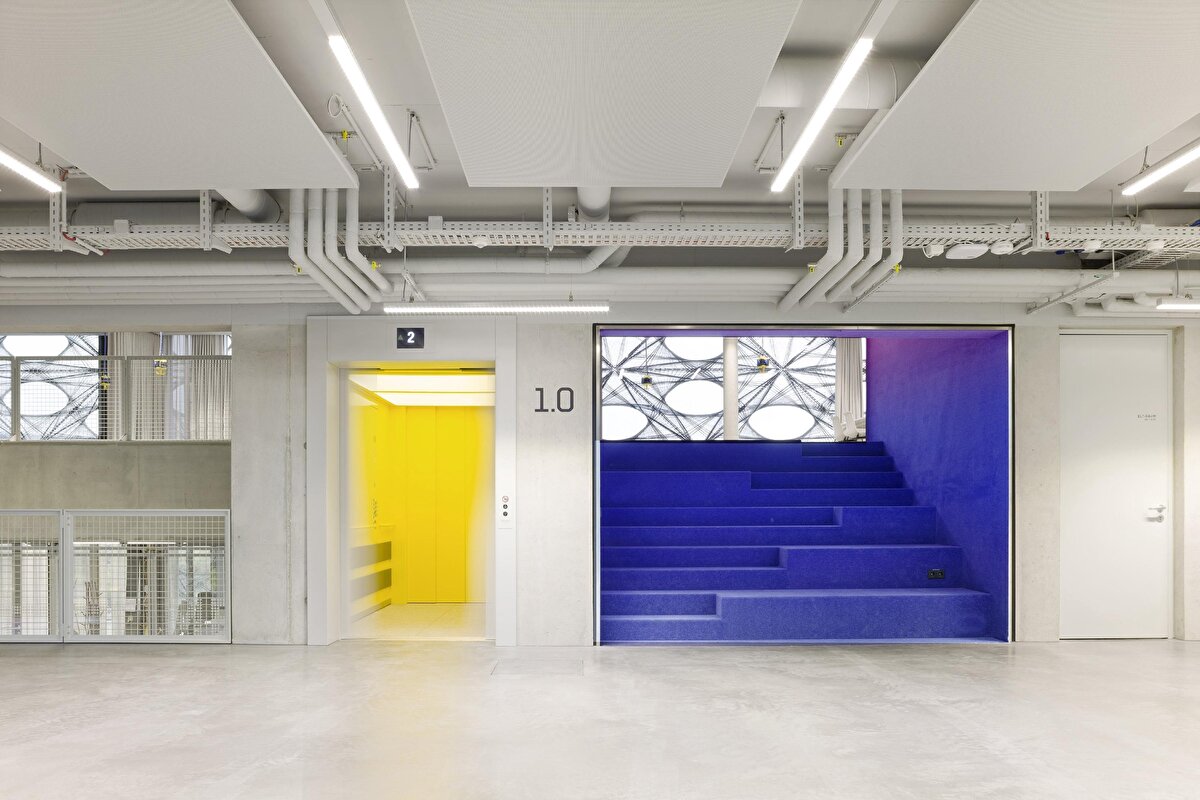
İç mekânda, yarım katlarla kademelenen açık plan organizasyon atriyum etrafında süreklilik kurarak farklı birimler arasında görsel ilişki sağlıyor. Açıkta bırakılmış beton yüzeyler, teknik tavan sistemleri ve nötr renk paleti, yapının endüstriyel karakterini tanımlıyor ve esnek kullanım senaryolarına uygun bir altyapı sunuyor. Renk geçişli iç mekân kurgusu ise tekstil kültürünün tarihsel ve teknolojik referanslarını çağdaş mekânsal yorumla bir araya getiriyor.
__
Architecture and textile technology come together in the Texoversum structure
Texoversum, designed by allmannwappner and Menges Scheffler Architekten in collaboration with Jan Knippers Ingenieure, is planned for 2023 in Reutlingen, Germany, as a center combining research, education, and production functions for textile-based technologies. The building's facade consists of carbon and glass fiber elements produced using the 'robotic filament winding' method; these elements, thanks to their load-bearing properties, transform the facade from a mere cladding into a structural shell. The tiles, positioned according to solar orientation, combine permeability, shading, and visual depth effects on the same surface, creating a highly expressive outer shell.
Inside, the open-plan organization, stepped with half-floors, creates continuity around the atrium, providing visual connections between different units. Exposed concrete surfaces, technical ceiling systems, and a neutral color palette define the building's industrial character and provide an infrastructure suitable for flexible usage scenarios. The color-transitional interior design brings together historical and technological references of textile culture with a contemporary spatial interpretation.
Photos Brigida Gonzalez
1-10
2-10
3-10
4-10
5-10
6-10
7-10
8-10
9-10
10-10