

Sayama Forest Chapel doğaya yönelen mimari bir ibadet alanı sunuyor

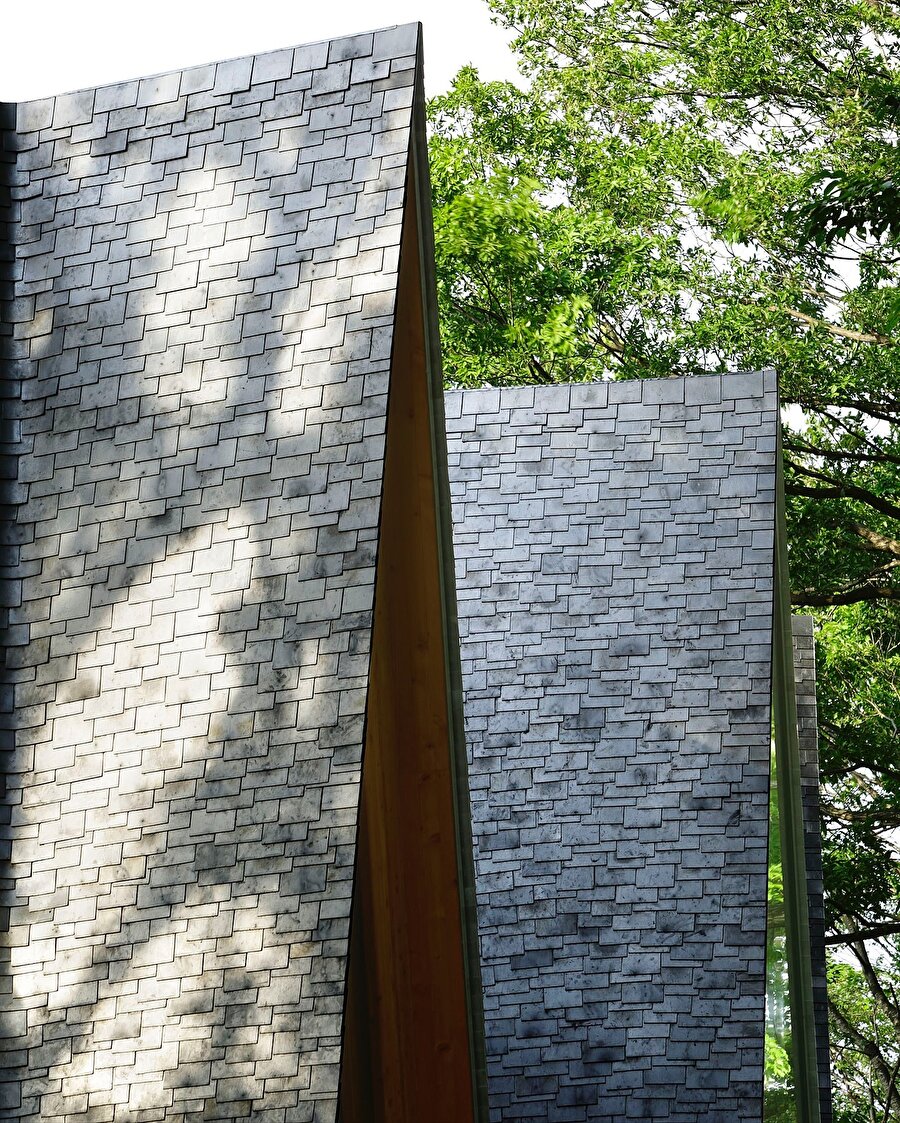
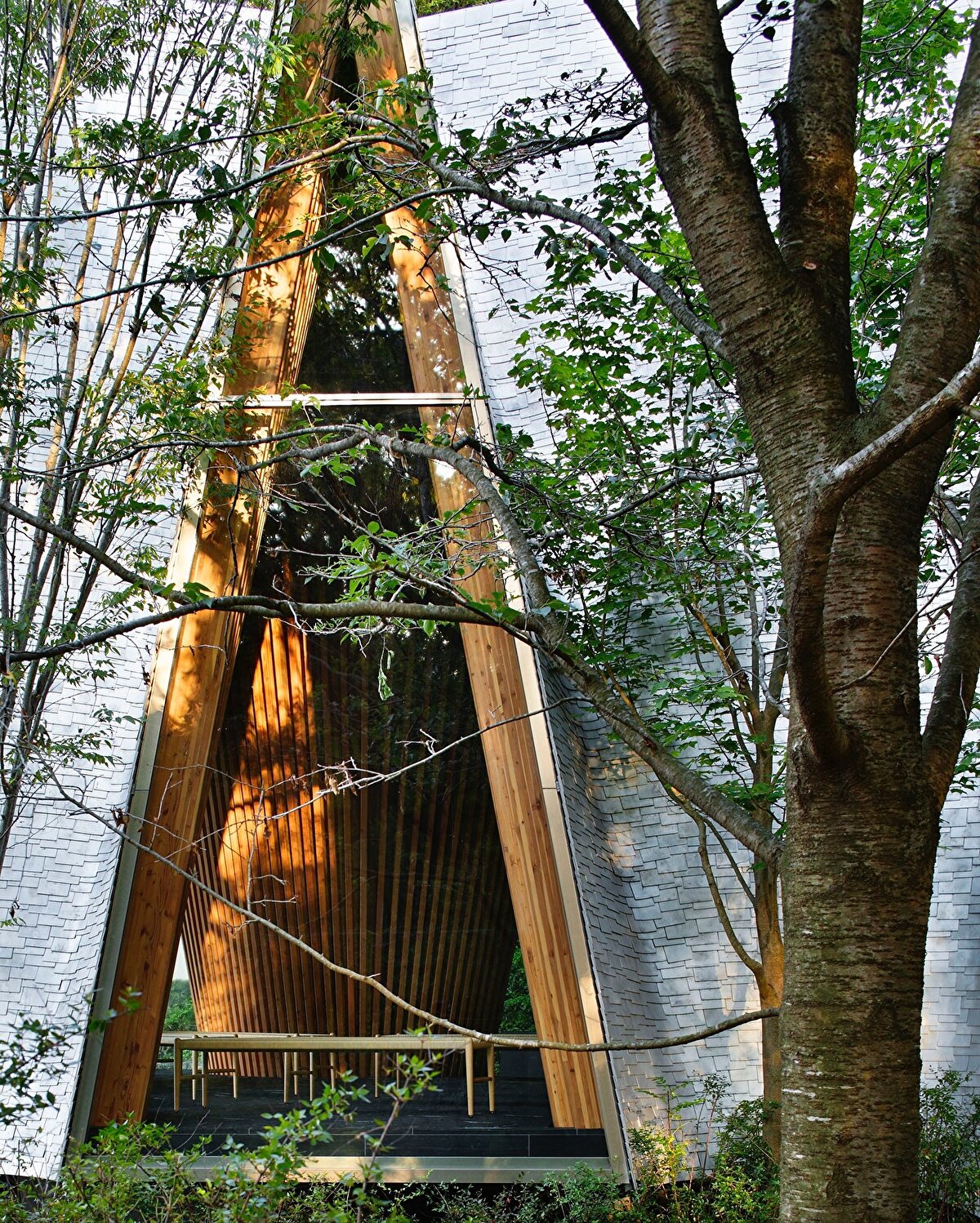
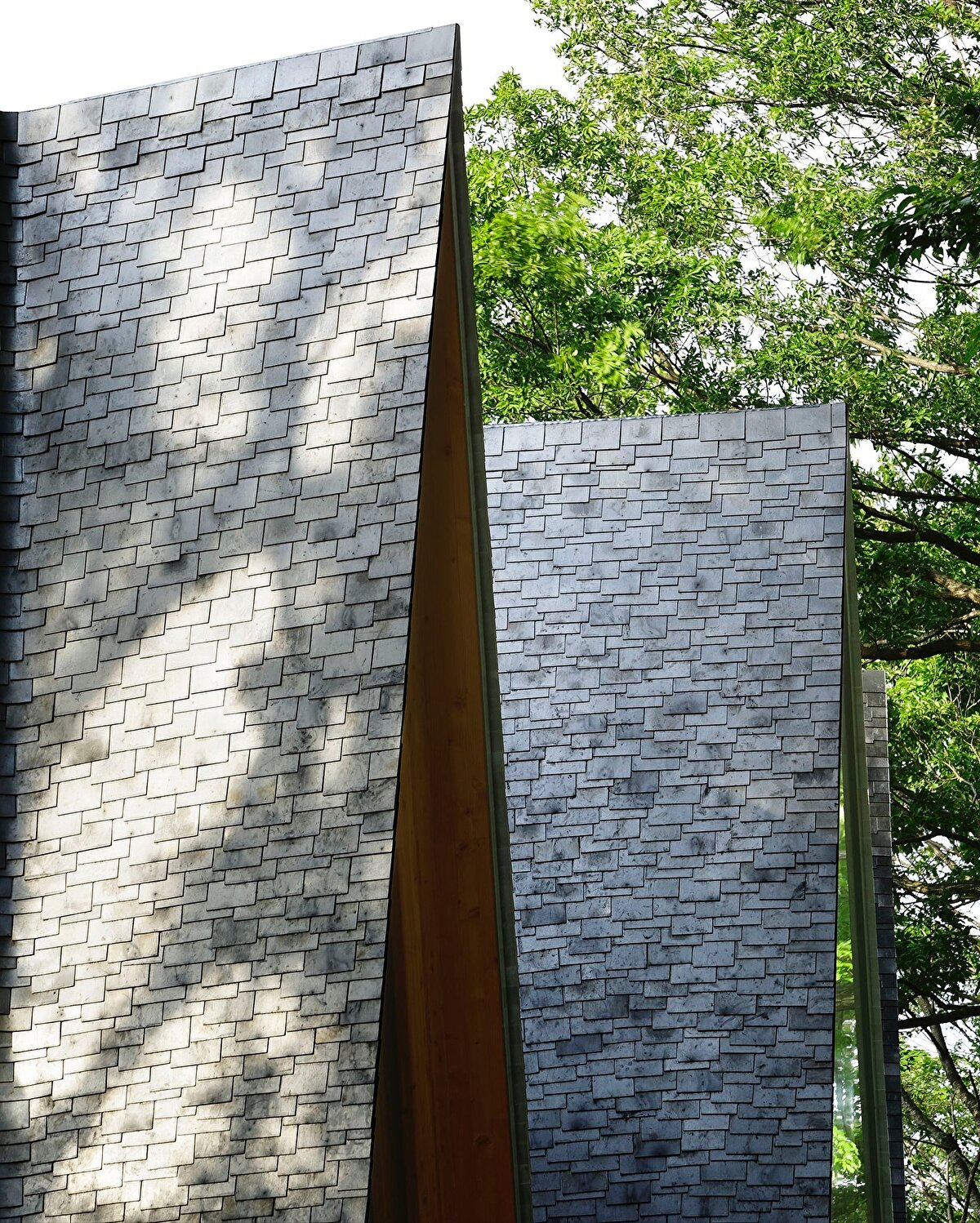
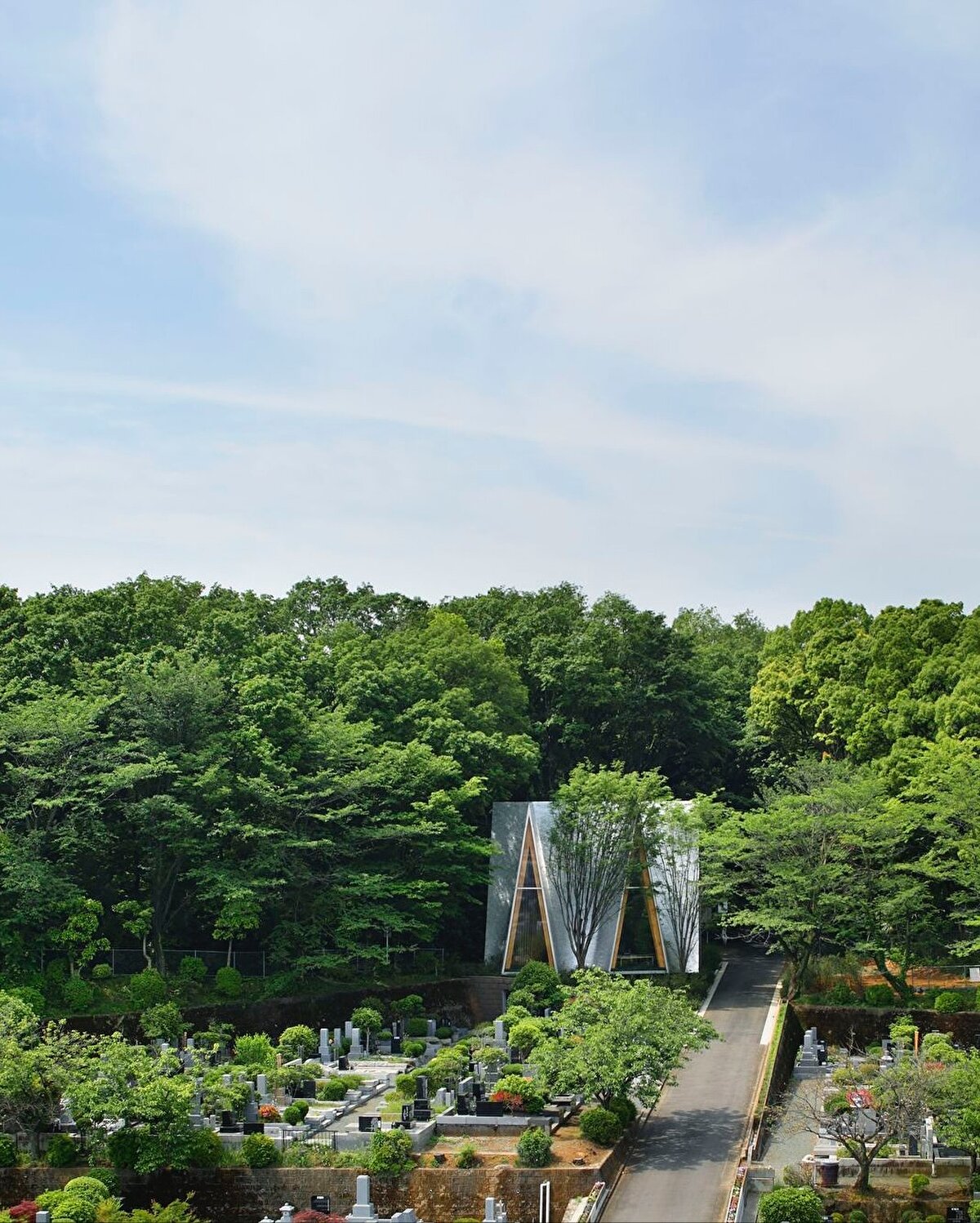
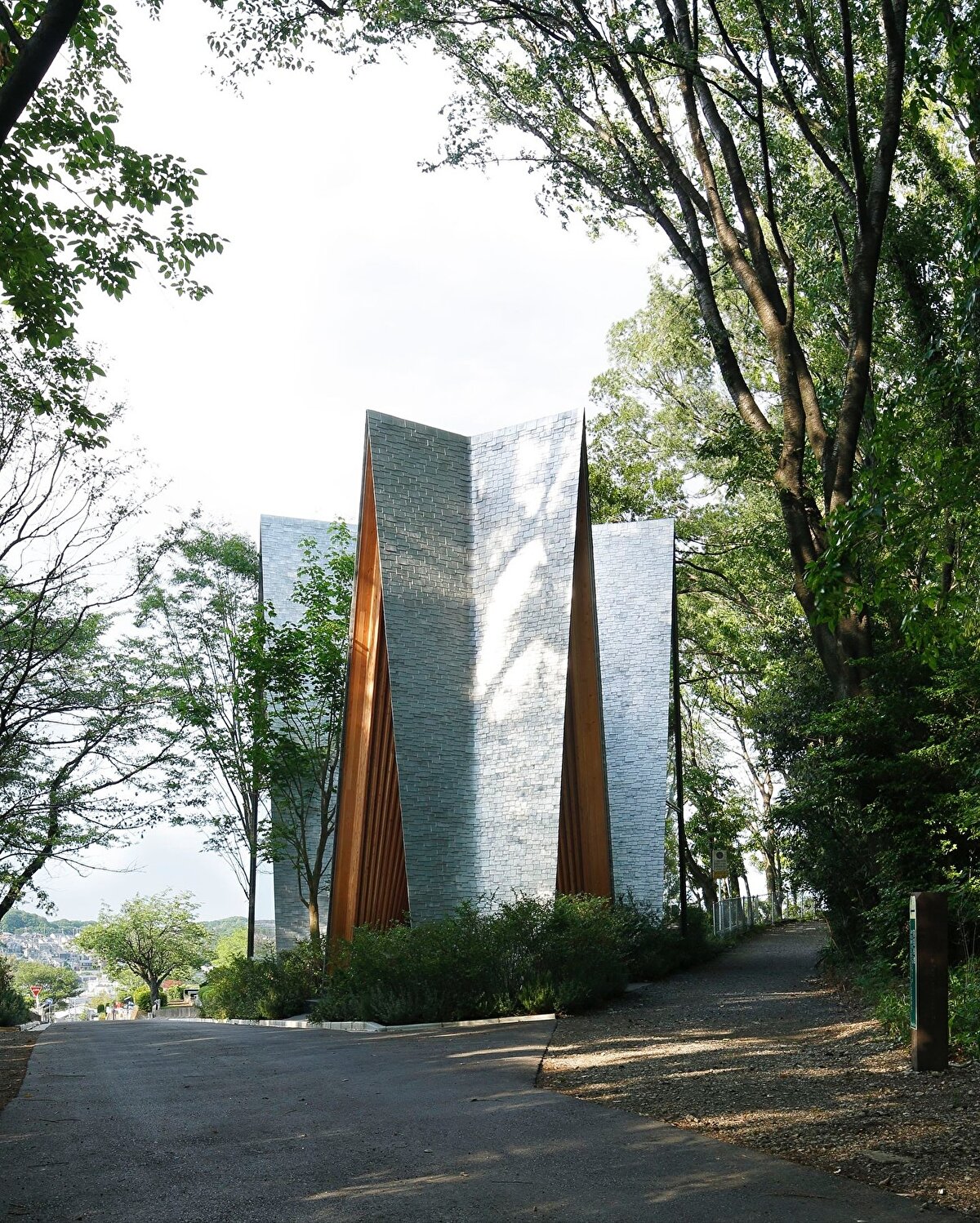
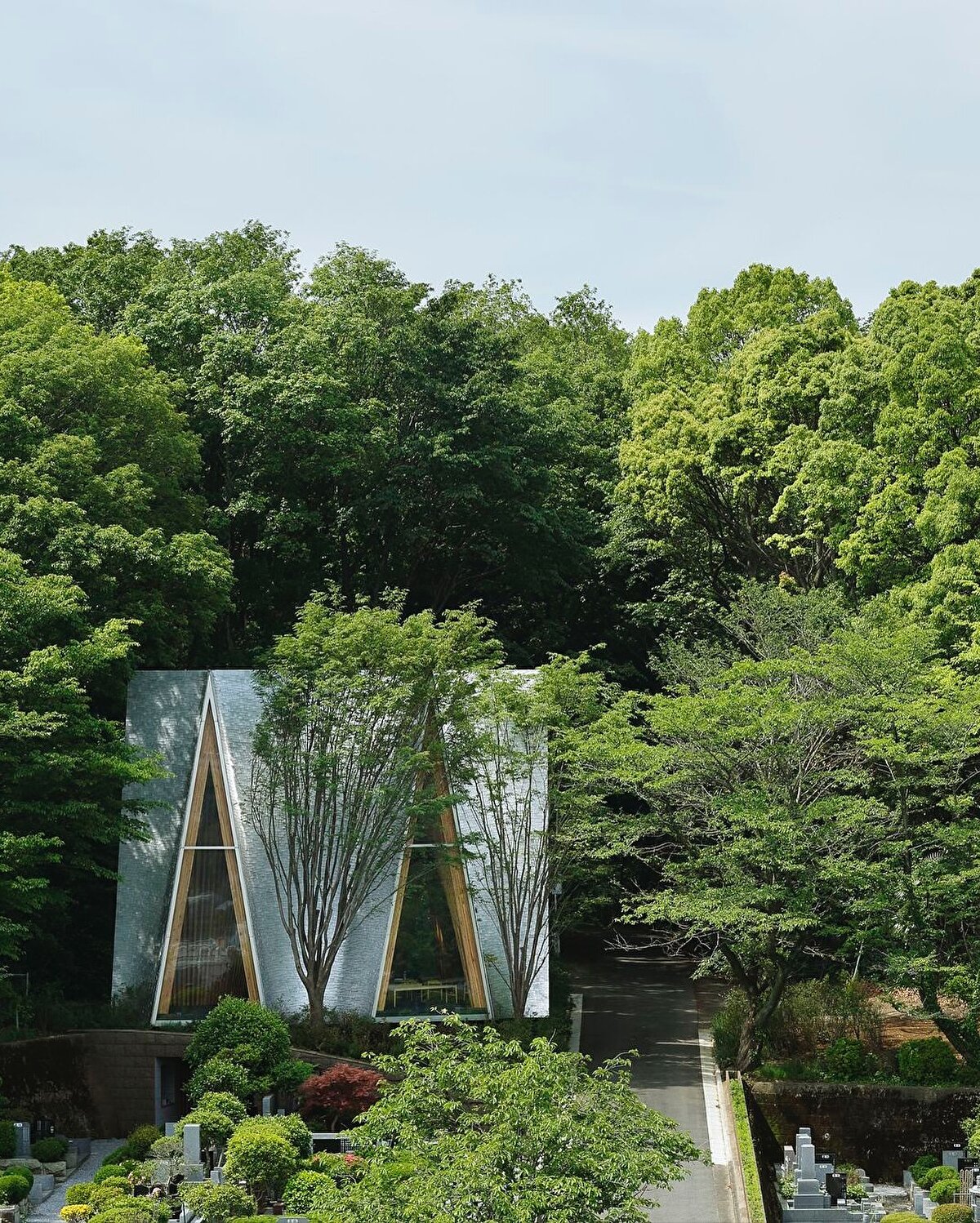
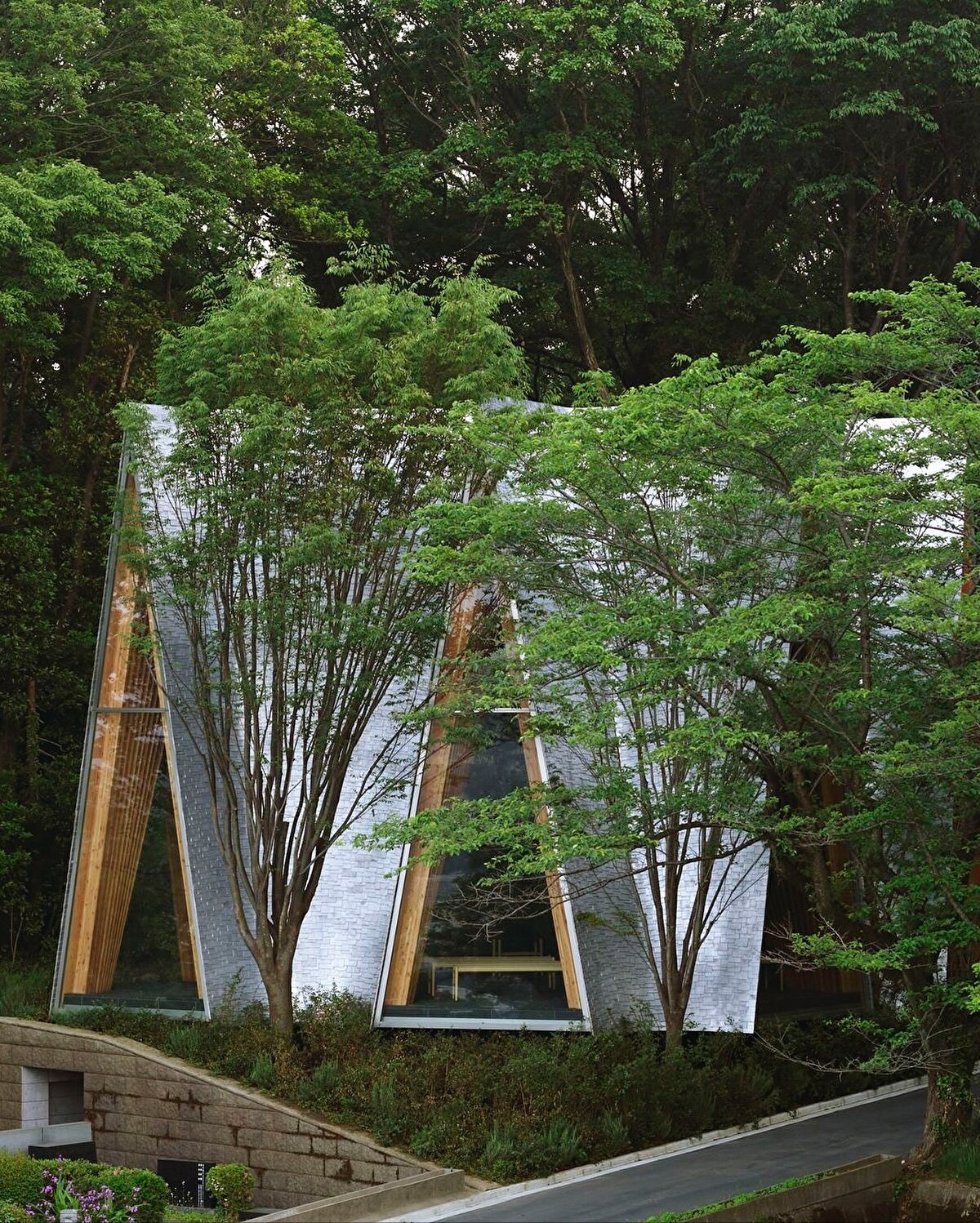
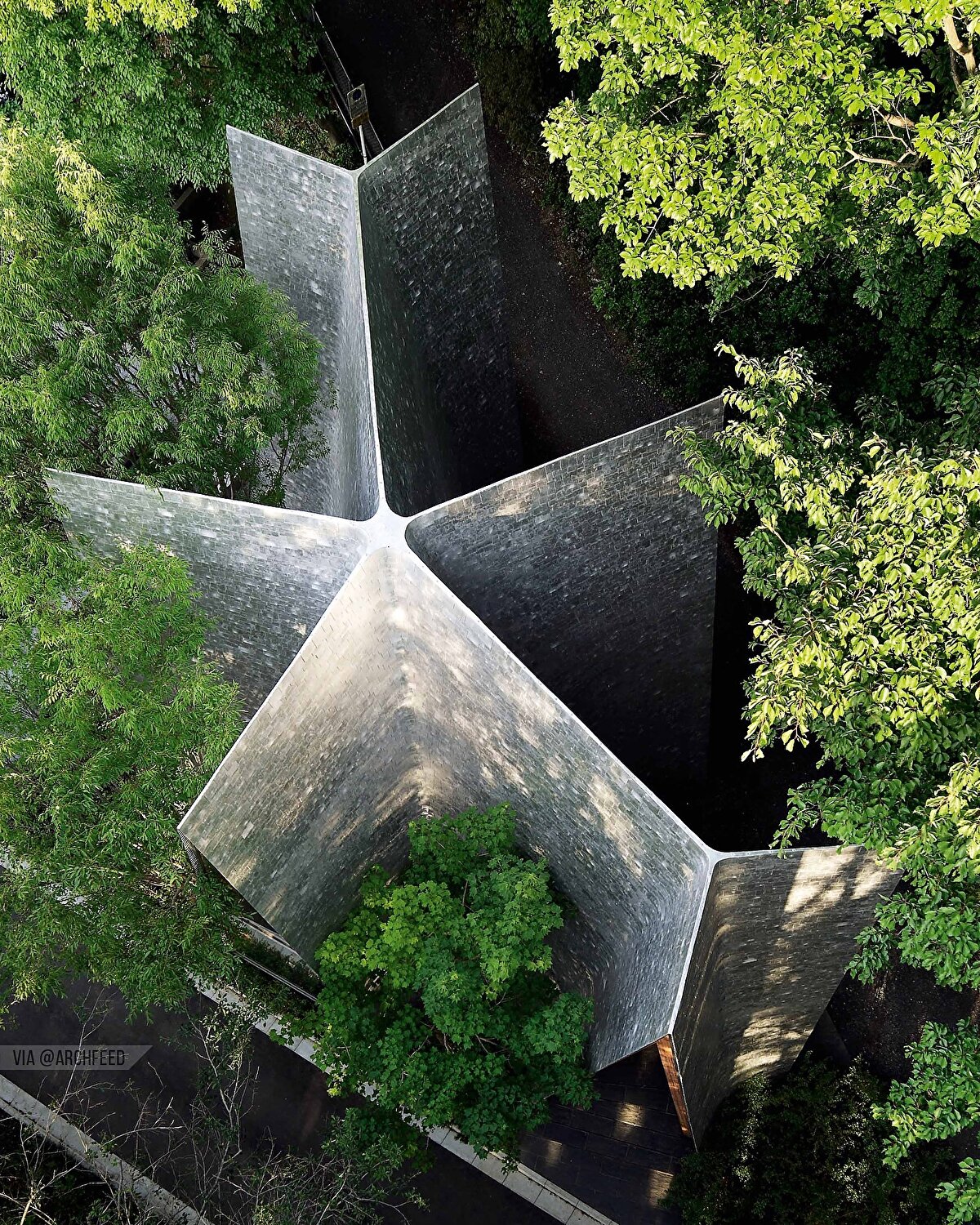
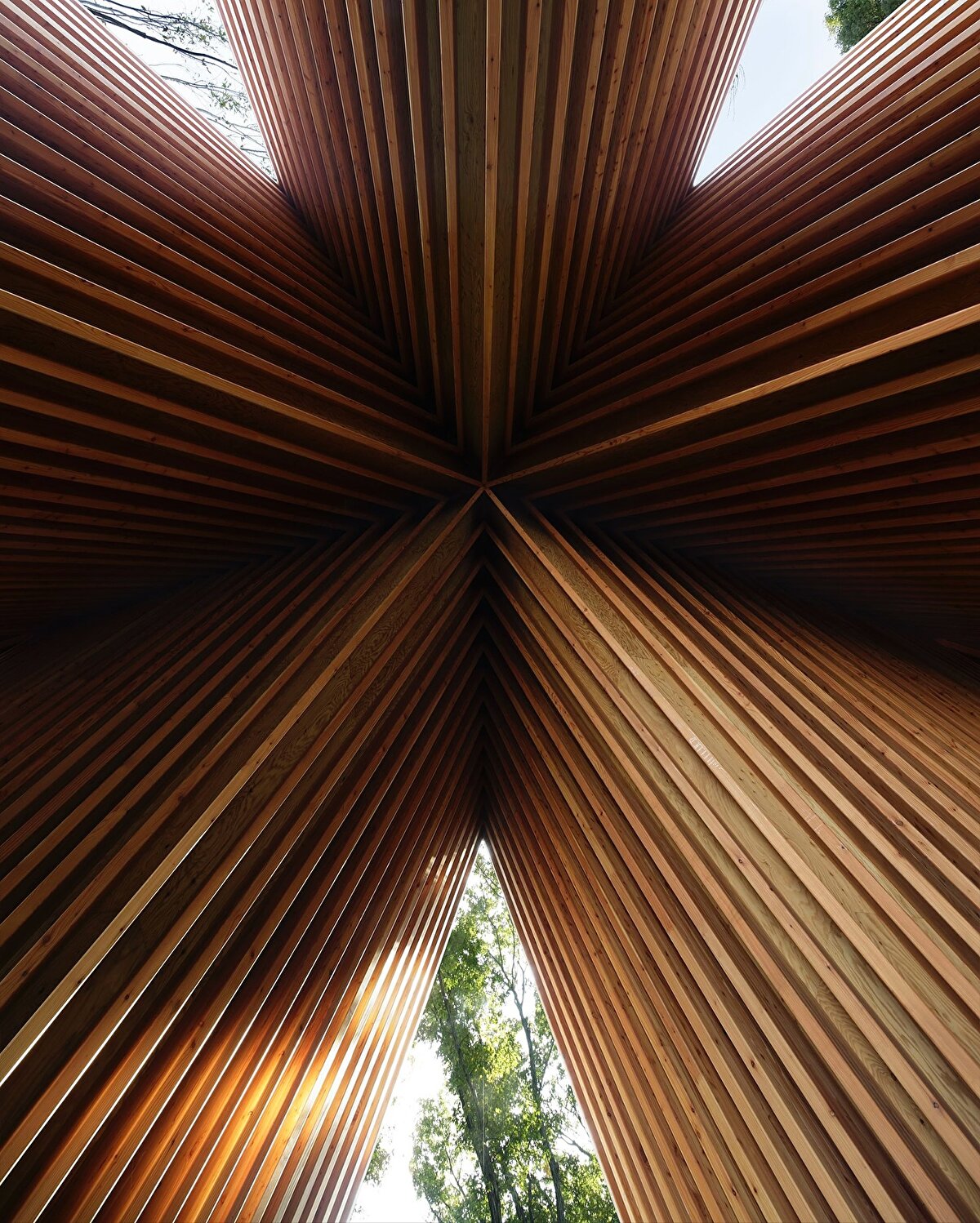
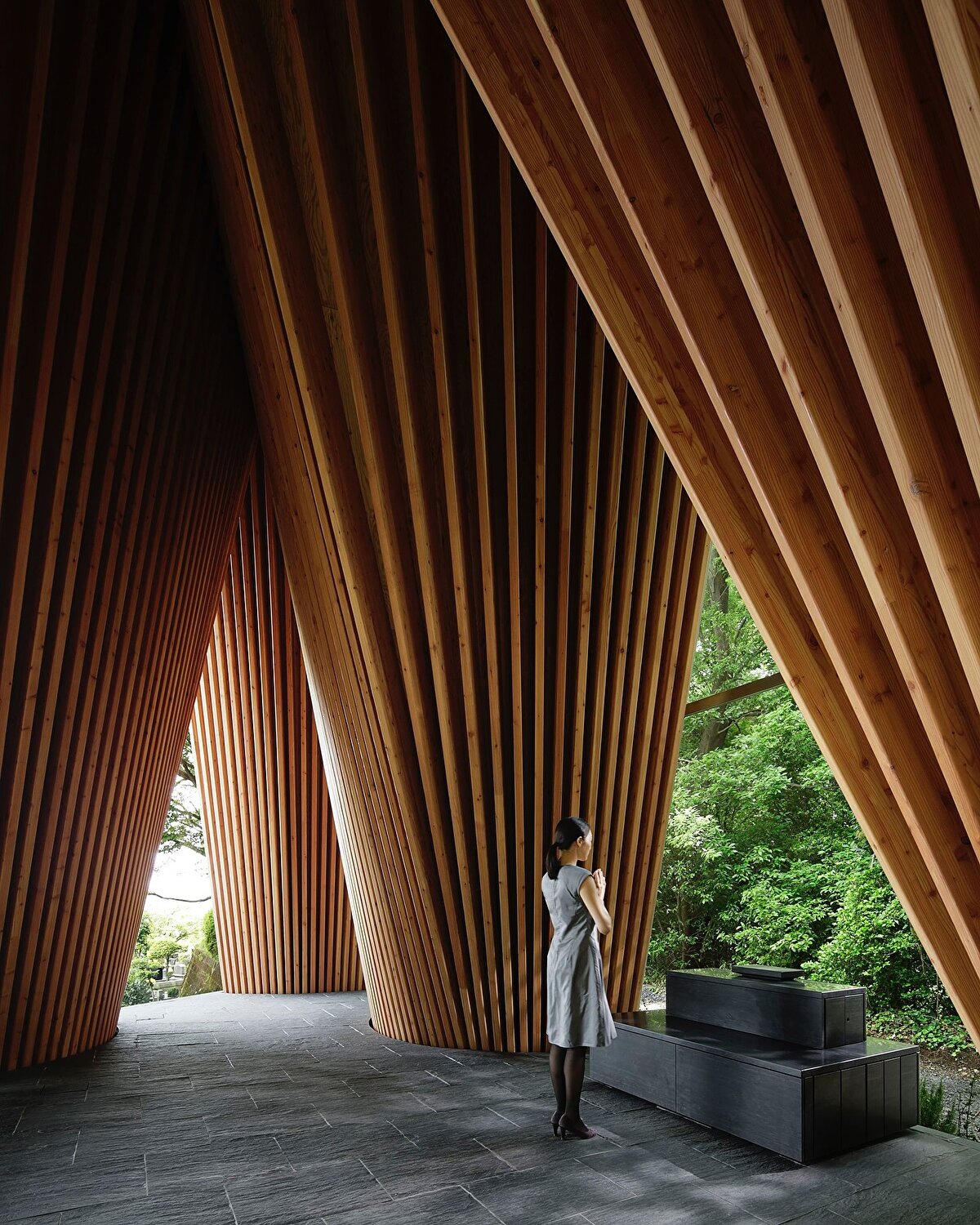
Sayama Forest Chapel, Hiroshi Nakamura & NAP @hiroshi_nakamura_naparchitects tarafından 2013 yılında, Saitama'daki Sayama göl koruma ormanının eşiğinde, doğal çevreyle kurduğu ilişki üzerine kurgulanıyor. Yapı, geleneksel Japon Gassho tipolojisinden esinlenen, birbirine yaslanan iki eğimli kiriş sistemiyle ormana yönelen bir mimari jest oluşturuyor. Alüminyum döküm kiremitlerle kaplanan çatı yüzeyi, zanaatkâr üretimiyle doğal ışığı kırarak çevredeki ağaçların hareketini mekâna yansıtıyor. Küçük üçgen bir parselde konumlanan yapı, içe doğru eğimli duvarlarıyla hem fiziksel hem de simgesel olarak ormana yönelen bir boşluk tarifliyor.
Mimari kurgu, farklı din ve inançlara açık mezarlık bağlamında, ormanı ortak bir dua nesnesi olarak konumlandırıyor. Bu nedenle yapı, doğrudan herhangi bir dini sembol taşımadan, mekânsal deneyimi doğa üzerinden tanımlayarak soyut bir ritüel alanı öneriyor. Eğimli kirişlerin oluşturduğu hacim, iç mekânda dingin ve ölçeklendirilmiş bir ışık atmosferi sağlıyor. Trafikten uzak, gündelik hayattan kopuk bu konum, yapıyı geçiş mekânı olmaktan çıkarıp, doğaya yönelişin mimari ifadesi haline getiriyor.
__
Sayama Forest Chapel offers a place of worship with architecture oriented towards nature
Sayama Forest Chapel, designed by Hiroshi Nakamura & NAP in 2013, is situated at the edge of Sayama Lake Conservation Forest in Saitama, conceived around its relationship with the natural environment. The structure creates an architectural gesture toward the forest with two sloping beam systems leaning against each other, inspired by the traditional Japanese Gassho typology. The roof surface, covered with cast aluminum tiles, refracts natural light through its artisanal production, reflecting the movement of the surrounding trees into the space. Located on a small triangular parcel, the structure defines a void that leans toward the forest, both physically and symbolically, with its inward-sloping walls.
Within the context of a cemetery open to different religions and beliefs, the architectural concept positions the forest as a shared object of prayer. Therefore, without bearing any direct religious symbols, the structure proposes an abstract ritual space by defining the spatial experience through nature. The volume created by the sloping beams provides a calm and scaled light atmosphere in the interior. This location, far from traffic and detached from everyday life, removes the structure from being a transitional space and turns it into an architectural expression of orientation towards nature.
📷: Koji Fujii @kojifujii_photography
1-9
2-9
3-9
4-9
5-9
6-9
7-9
8-9
9-9